
Accessible Latin Textual Criticism: Digital Latin Library
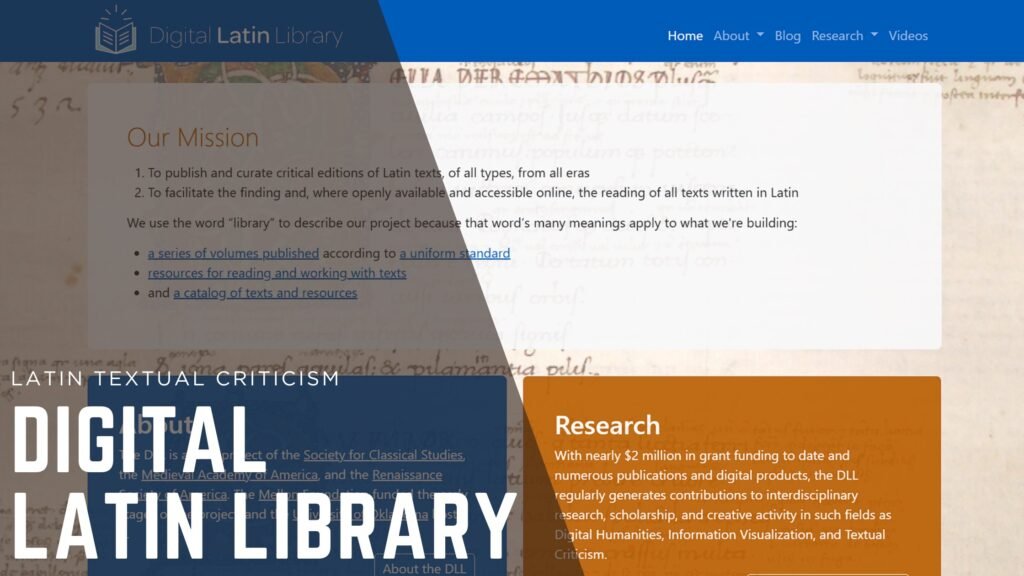
In an alternate life where I stayed in academia, maybe I would have been more involved in Digital Humanities like the fine folks at Digital Latin Library. Then again, I’m not sure I would have really delved into an interest in coding.
It’s an amazing resource. I thank everyone involved for not only the interest in bringing Latin texts online – which, as they note, are often already readily available on the internet, but also for expanding access to ap crits (apparatus criticus), which opens up the tradition of textual history.
Its stated missions is “facilitating the finding and, where openly available and accessible online, the reading of all texts written in Latin.”
Who it's For:
Ideal audience is probably post-bac and graduate studies in terms of getting the most out of it. But it’s useful to anyone reading Latin!
Cost:
Free!
In Detail:
Rich Index of Physical and Digital Latin Media
The Digital Latin Library contains a catalog for both print and digital resources. Not all of them, as the focus is cataloguing things already readily online and preferably free to use. (Much like this website.) But whereas Teach Yourself Classics is a very humble affair with an goal of helping people teach themselves, DLL is focused entirely on finding Latin texts that people can read. Especially texts that have critical appendices.
Read Works With Textual Criticism
And on that note, let me highlight how important textual criticism is.
First, that’s part of how readers interpret text. Scholars have spent countless hours reading through ancient citations and medieval manuscripts to try to piece together the truest version of an ancient text.
Second, it provides help for the reader. A blank wall of text is daunting. Notes are the best. But even manuscript notations can help readers understand if a line is messed up… or if it’s just them.
Latin Fragments and Citations
If you know something about ancient texts, you know we don’t have all of them. Some works we have in their entirety, some we have totally lost, and others we have in fragments or citations from other authors. Citations meaning another author references a work through quotations or paraphrases.
We have a sad number of works we only know by a few quotations.
DLL amazingly also lists those fragments under the original author’s names, giving us what we have of those works.
Trajan/Augustus, this site is an amazing resource.
Ad scientiam, Magistra